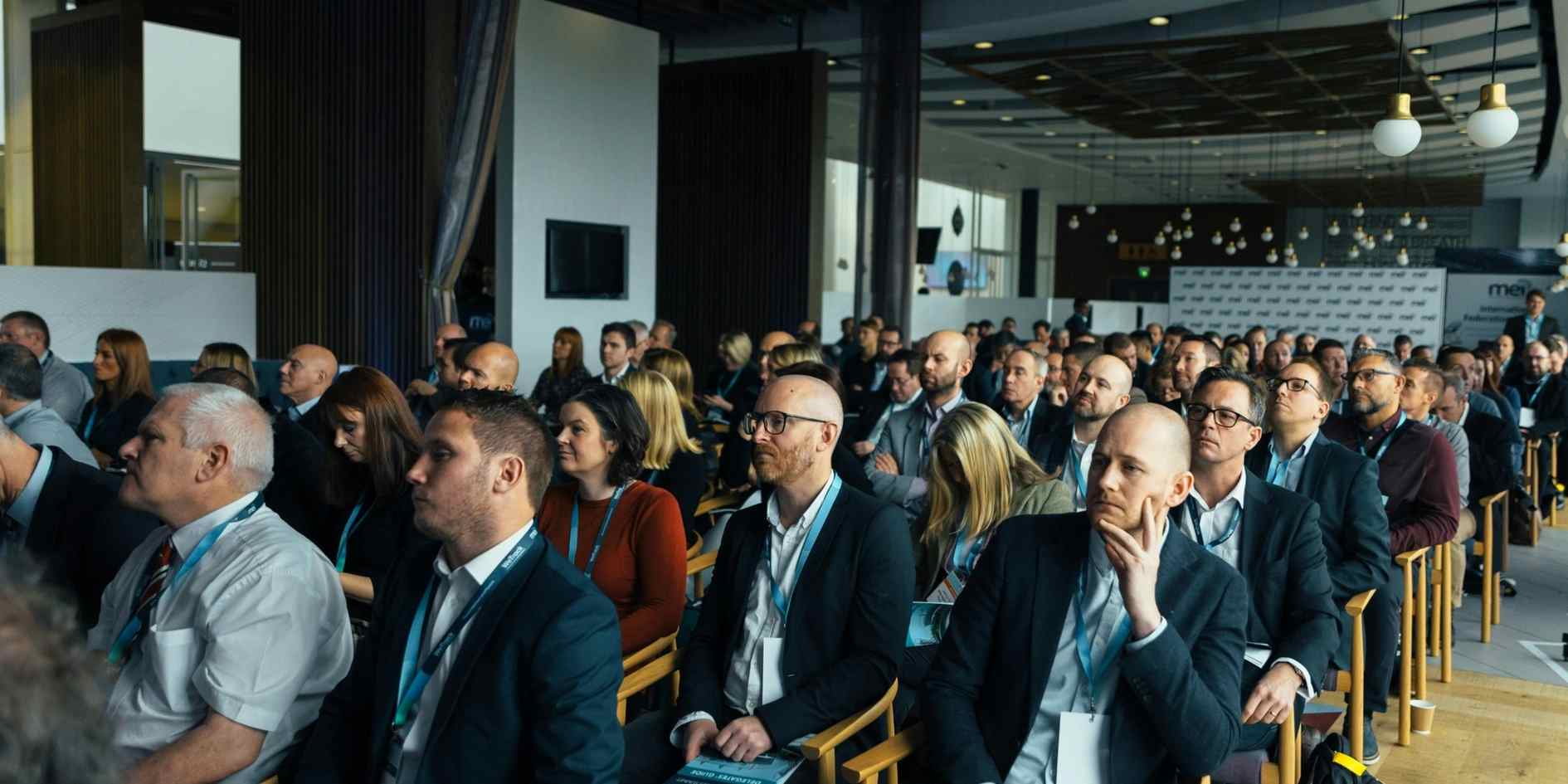
The UK healthcare events calendar is packed. NHS Confed Expo, GIANT Health, Healthcare Estates, the list keeps growing, and so does the pressure on the teams organising them. Getting the right event company in your corner is not just a logistical decision. It is a clinical reputation decision.
Pick wrong and you are looking at badge queues that wind out the door, registration data you cannot trust, and attendees who spend their first twenty minutes frustrated before they have heard a single speaker. Pick right and the whole thing runs quietly in the background while your delegates focus on the content that actually matters.
The UK MICE market was valued at approximately $88 billion in 2024 and is forecast to reach $142 billion by 2030. Healthcare conferences sit right at the heart of that growth, and the demand for specialist event partners is accelerating with it. (Grand View Research, 2026)
This guide walks through seven things to assess before you sign with a healthcare event company in the UK. By the time you finish reading, you will know exactly what separates a competent agency from one that is genuinely built for the sector.
What Should You Look for in a Healthcare Event Company UK?
Look for proven healthcare sector experience, integrated registration and onsite check-in technology, compliance awareness, and real-time data capabilities. A company that handles both pre-event registration and on-the-day badging under one system eliminates the data gaps that plague most healthcare conferences.
1. Does The Company Actually Know The Healthcare Sector?
This is the filter that eliminates most agencies immediately.
Healthcare events are not corporate away days. They involve NHS commissioners, clinicians, pharmaceutical representatives, HCPs, and in many cases, regulatory observers. The language, the audience expectations, the content flow, the compliance considerations around pharma sponsorship, all of it is sector-specific. A generalist agency that has done one hospital gala dinner does not qualify.
What to check:
- Do they have a client list with named healthcare organisations, NHS trusts, or pharma companies?
- Can they walk you through how they managed CPD accreditation logistics at a previous event?
- Do they have documented experience with healthcare compliance requirements, including ABPI code considerations for sponsored events?
H3: Healthcare Conference Experience Vs General Event Experience
There is a real difference between a company that can run a conference and one that understands what a room full of senior clinicians and NHS leaders needs from day one. The former gives you an event. The latter gives you an event that actually serves its purpose. Reviewing a company’s expertise and sector track record before shortlisting is time well spent.
2. How Does Their Event Registration Technology Work?
Inaccurate or fragmented registration data causes check-in bottlenecks, undercounts, and compliance failures. Integrated platforms that connect pre-event registration directly to onsite badging reduce check-in time to roughly 10 seconds per attendee, compared to two to three minutes with manual or disconnected systems.
This is where most healthcare event companies in the UK fall short, not in the planning, but in the execution of registration at scale.
The critical question to ask: is their registration platform the same system that runs onsite check-in? Or are you dealing with two separate tools that need to be reconciled on the day?
Disconnected systems create problems that are completely avoidable:
- Attendee data entered during pre-registration does not match what appears at the badge printer
- Walk-in registrations sit in a separate spreadsheet until someone manually merges the files
- Session attendance figures are estimates rather than verified records
- Post-event reporting is assembled from three different exports
Healthcare events specifically need accurate attendance data, for CPD certificate issuance, for sponsor reporting, for NHS governance. Guesswork is not acceptable.
H3: What To Ask About Event Registration Software
Ask specifically whether their system can handle on-demand badge printing from a live, synchronised attendee database. Ask what happens when a delegate updates their details after registration closes. Ask how they handle walk-ins without creating a data backlog. These questions will tell you more than any sales deck.
3. Can They Handle Onsite Check-In At Healthcare Conference Scale?
The check-in desk is the first physical touchpoint your delegates have with the event. At a healthcare conference with five hundred, a thousand, or two thousand attendees arriving in a compressed window, it can also be the last thing they remember, for the wrong reasons.
Among the top technologies planners plan to use in their event programmes in 2026, onsite check-in and badging tools rank in the top tier, cited by 26% of meeting professionals. (Cvent, 2026) That number is growing because the industry has finally accepted that check-in is not a clerical afterthought,it is an operational priority.
H3: Staffed Vs Self-Service Check-In Desks For Healthcare Events
The right answer depends on your attendee profile. A medical symposium with 300 senior consultants usually benefits from staffed desks that project the appropriate level of service. A large NHS workforce conference with 1,500 delegates needs a mix of self-service kiosks and staffed lanes to manage volume.
The key is that whichever model you use, badge printing needs to be instant, accurate, and connected to the same database your team was managing pre-event. Any company that cannot demonstrate this capability clearly should not be on your shortlist.
4. Do They Understand Healthcare Event Compliance Requirements?
What compliance issues affect healthcare event companies in the UK? UK healthcare events involving pharmaceutical sponsors must comply with the ABPI Code of Practice, which governs hospitality, sponsorship disclosure, and attendee eligibility. Events with clinical content may also need to meet CPD accreditation standards. A specialist event company will build these requirements into their workflow, not treat them as an afterthought.
Most generalist event agencies encounter healthcare compliance as a surprise. They learn about ABPI guidelines when a sponsor flags an issue, not before.
A healthcare-specialist event company should be able to tell you, without prompting:
- How they document pharmaceutical company sponsorship in event materials
- How they handle delegate eligibility verification for sponsored events
- Whether their registration system can capture the data fields required for CPD certificate issuance
- How they manage consent for delegate data sharing with sponsors
If they look uncertain when you raise these topics, you have your answer. Thorough attendee management processes, covering delegates, speakers, sponsors, and VIPs, are a baseline expectation for any company operating in this sector.
5. What Does Their Data And Reporting Capability Actually Look Like?
The event ends. Then what?
Healthcare organisations increasingly need post-event data that goes beyond a headcount and a delegate satisfaction survey. Sponsors want verified attendance figures. NHS teams want session attendance broken down by delegate type. CPD providers want precise records tied to individual registrations.
RFID badges now track approximately 95% of attendee data accurately at large-scale events, and real-time analytics platforms are standard at the higher end of the market. The question is whether your event company can actually deliver data at that level, or whether they are going to hand you a CSV export and call it reporting.
H3: Real-Time Event Analytics For Healthcare Conferences
Real-time data matters during the event, not just after it. Knowing which sessions are over capacity before the fire marshal arrives. Knowing which workshop has fifty empty seats so you can redirect delegates at the coffee break. These are operational decisions that require live data, and the event company you choose should be able to provide it.
6. How Integrated Is Their Pre-Event And Onsite Operation?
This is the gap that causes more problems at healthcare events than almost anything else.
Pre-event registration is managed by one team, using one platform, building one dataset. Then on the day, a different crew arrives with a different setup, and the data migration is a USB stick and a prayer.
Research from the MICE sector in 2026 shows that one in-person meeting delivers the same impact as three virtual meetings, with more than 75% of customers still preferring live interaction. The investment organisations are making in live healthcare events is significant. The operational infrastructure needs to match that investment.
A genuinely integrated operation means:
- Pre-event registration data feeds directly into the onsite check-in system without manual export or import
- Badge printing is triggered from the same live database, not a frozen snapshot
- Walk-in registrations appear in the same dataset immediately
- Post-event reports pull from one unified source
H3: Why Siloed Event Technology Creates Healthcare Data Problems
When registration and check-in run on separate systems, data reconciliation happens after the event. Errors get discovered after CPD certificates have been issued. Attendance figures sent to sponsors get revised. It creates additional work, reputational risk, and in some cases, compliance problems. A single integrated platform removes all of it, which is exactly what MICE Concierge’s EventsAir partnership is built to deliver.
7. What Is The Quality Of Their On-The-Day Support?
Planning documents are not the same as event delivery. Any agency can produce a run-of-show and a site map. What matters is what happens when the keynote speaker calls in sick at 7am, when the badge printer jams at 8:59, or when the venue suddenly restricts access to the breakout rooms.
The UK events market is projected to grow from $86 billion in 2025 to $99 billion by 2035, and competition for attendee time and attention is intensifying. Healthcare organisations running conferences are increasingly being judged on the delegate experience, which means the event company’s ability to problem-solve in real time is not a nice-to-have. It is the job.
Ask for specifics. How many staff will they have onsite? Who is the named senior contact on the day? What is the protocol if a technical system fails? What redundancy do they have in their check-in technology?
H3: Evaluating Event Day Staffing For Healthcare Conferences
A ratio of roughly one check-in staff member per 100 to 150 expected attendees is a reasonable benchmark for healthcare conferences. For events with a very compressed arrival window, say, a plenary-led conference where 800 people need to be seated by 9am, you may need to go higher. The right company will have done this calculation before you ask. You can also review event management and logistics considerations when assessing whether an agency has the operational depth to back up their promises.
Why Mice Concierge Is The Answer To All Seven Questions?
Here is the honest version of this conclusion: most healthcare event companies in the UK will do some of these things well. Very few do all of them within a single, integrated service.
MICE Concierge was built specifically to close the gap between pre-event registration and onsite delivery. The model is straightforward: one company manages both ends of the process, using a single system, so the data your team captures during registration is the same data that appears at the check-in desk on event day, without manual exports, without reconciliation headaches, and without the errors that come from stitching together disconnected platforms.
For healthcare conferences specifically, that integration matters more than it does elsewhere. Attendee records need to be accurate for CPD certificate issuance. Session attendance needs to be captured cleanly for sponsor reporting. Walk-in registrations cannot sit in a separate spreadsheet until Monday.
MICE Concierge provides:
- Pre-event registration managed through a single platform with full delegate management
- Onsite check-in and badging, staffed or self-service, running from the same live database
- Real-time attendance data available throughout the event, not just in the post-event report
- On-demand badge printing tied directly to verified registration records
- Experienced onsite teams who understand the operational pace and professional expectations of healthcare conferences
The UK MICE market is projected to grow from $69.5 billion in 2024 to $152 billion by 2035, and within that, healthcare events are among the fastest-growing and most operationally demanding segments. The organisations running them need a partner that understands what is at stake, not a generalist agency working from a template.
H2: Choosing Healthcare Event Companies In The UK: Make It Count!
Choosing between healthcare event companies in the UK is not a decision to make on price alone or on the strength of a polished pitch deck. The companies that consistently deliver for healthcare clients share a common thread: they treat registration data, onsite execution, and post-event reporting as a single connected operation rather than three separate handoffs.
For NHS teams, pharmaceutical companies, and medical associations, that integration is not a luxury, it is what makes the difference between an event that runs and an event that delivers. Whether you are organising a 200-person clinical symposium or a 2,000-delegate NHS conference, the checklist in this guide gives you the framework to separate capable generalists from genuine specialists.
If you are planning a healthcare conference, medical symposium, NHS stakeholder event, or pharmaceutical product launch in the UK, get in touch with MICE Concierge before you sign anything else.
Frequently Asked Questions About Healthcare Event Companies
What Are The Top Healthcare Event Management Companies In The Uk?
Top healthcare event management companies in the UK include specialists in medical conferences, pharmaceutical events, and NHS stakeholder programmes. The strongest partners combine pre-event registration, onsite check-in, and badging under one integrated system, rather than outsourcing each element separately. MICE Concierge is built precisely for this model, making it a strong choice for healthcare organisations that need accurate data and seamless on-the-day delivery.
What Services Do Uk Healthcare Event Companies Typically Provide?
UK healthcare event companies typically provide delegate registration, onsite check-in and badging, session management, CPD accreditation support, sponsor logistics, AV coordination, and post-event reporting. The best providers manage registration and onsite delivery through a single integrated platform, which eliminates the data reconciliation problems that arise when these functions are handled by separate teams or tools.
Which UK Companies Specialise In Organising Healthcare Conferences?
Several UK agencies have healthcare conference experience, but genuine specialists are fewer. Look for companies with a named NHS or pharmaceutical client base, documented compliance awareness around ABPI guidelines, and integrated registration-to-badging technology. MICE Concierge specialises in the operational infrastructure that healthcare conferences depend on, accurate registration data, fast onsite check-in, and real-time attendance tracking.
How Do You Choose A Reliable Partner For Healthcare Exhibitions In The UK?
Choose a partner with verifiable healthcare sector experience, not just general events experience. Assess whether their registration and onsite check-in systems are integrated or siloed. Ask specifically how they handle walk-in registrations, CPD data capture, and post-event sponsor reporting. A reliable partner will answer these questions without hesitation and provide references from comparable healthcare events.
What Are The Best Services For Healthcare Trade Shows In The UK?
The most valuable services for healthcare trade shows are integrated registration and check-in technology, on-demand badge printing, real-time attendance analytics, and experienced onsite staffing. These functions determine how smoothly delegates move through the venue and how accurately attendance is recorded for exhibitor and sponsor reporting. MICE Concierge provides all of these within a single end-to-end service built for professional healthcare events.