
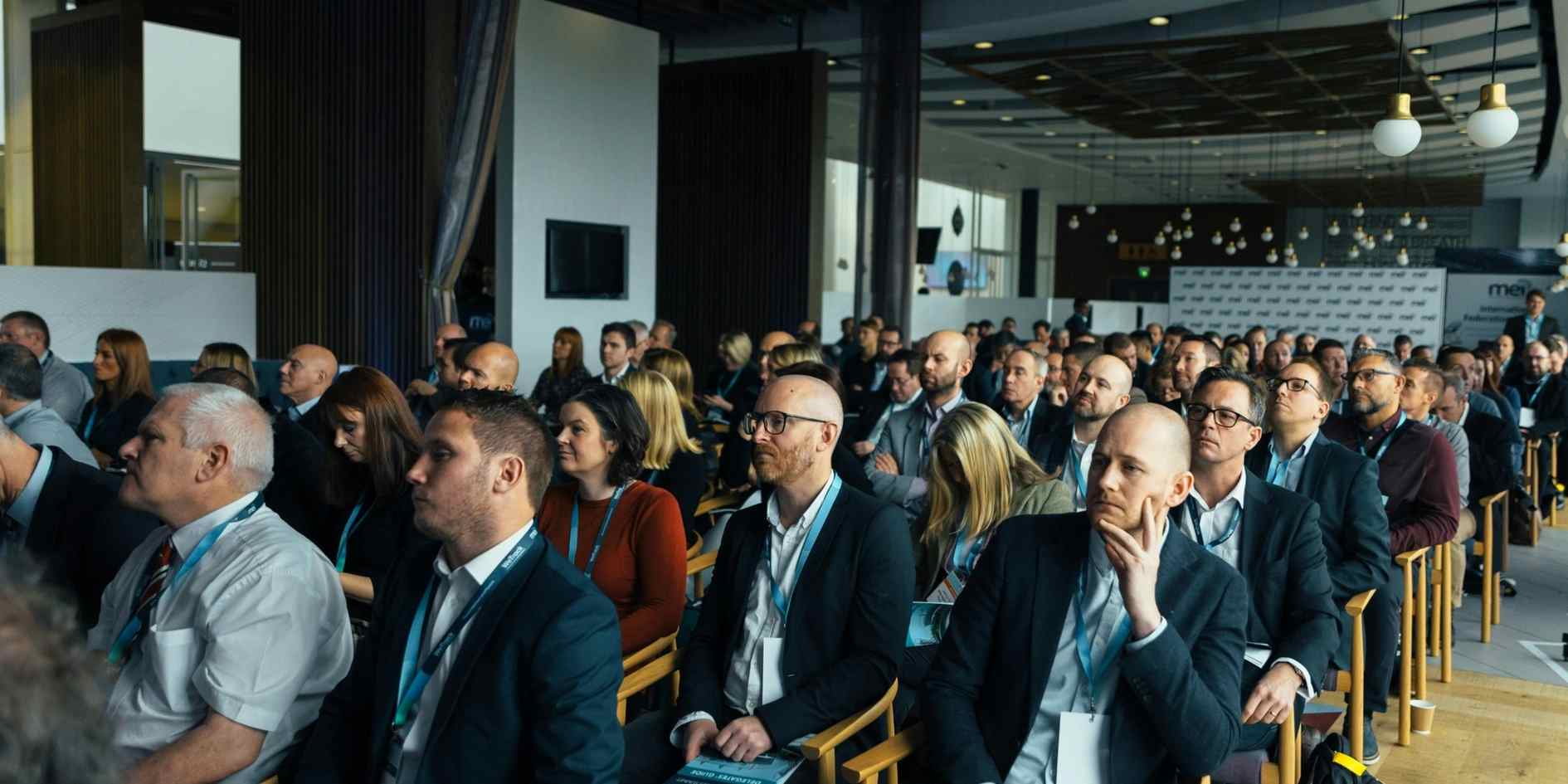
Big business events are large-scale corporate gatherings, conferences, congresses, product launches and incentive programmes, designed to build relationships, close deals and shape industry opinion. In 2026, the winning ones pair strong face-to-face design with clean data, fast onsite check-in and content structured for both search engines and AI answer engines.
The UK events sector isn’t slowing down. It’s now worth £68.7 billion a year, up 11.4% on the year before, and corporate gatherings are a huge part of that growth. But “big” doesn’t just mean more delegates or a bigger hall. It means more moving parts, registration, badging, abstracts, accommodation, AV, all of which have to work together without a hitch. This guide breaks down what actually makes big business events succeed in 2026, and where most planning teams still leave ROI on the table.
What Counts as a Big Business Event in 2026?
A big business event is any corporate gathering large enough that manual, spreadsheet-based planning breaks down, typically 300+ delegates, multiple tracks, or an international audience. Think annual conferences, medical congresses, product launches and shareholder meetings.
Scale changes the maths. A 50-person breakfast briefing can run on a shared spreadsheet. A 2,000-delegate congress with a multi-track programme, CPD tracking requirements and international travel can’t. The moment an event grows past a few hundred attendees, the risk of duplicate registrations, mismatched badges and a chaotic check-in desk grows with it. That’s the gap most of this guide is written to close.
Comparison: In-House vs Managed Registration for Big Business Events
| Factor | In-House / DIY | Managed Service (e.g. MICE Concierge) |
| Setup time | Weeks, often duplicated across tools | Days, using proven templates |
| Data accuracy | High risk of duplicate or missing records | Single source of truth from registration to badge |
| GDPR & security | Ad hoc, depends on internal IT resource | Handled to GDPR, SOC 2 and ISO 27001 standards |
| Onsite check-in | Manual lists or unlinked kiosks | Integrated check-in and badging with QR codes |
| Staff time cost | High — internal team stretched thin | Low — outsourced to specialists |
| Scalability | Struggles above ~500 delegates | Built for 300 to 5,000+ delegates |
Why Do Big Business Events Still Deliver Better ROI Than Digital-Only Marketing?
Face-to-face events convert better because they combine trust-building with immediate feedback, something a webinar or email campaign can’t replicate. Gartner research on executive events shows that well-designed in-person formats remain one of the most effective ways to reach and influence senior decision-makers.
Budget holders keep asking whether events still earn their keep against digital channels. The data says yes, and increasingly so. Attendee preference for in-person events climbed to 82% in 2025, up from 68% just two years earlier, a sign that screen fatigue is pushing decision-makers back into rooms. Gartner’s own guidance on designing executive events to attract decision makers makes the same point: events that are built around real conversations, not just content delivery, are what move senior buyers through the pipeline.
The UK’s business events segment alone generated around £33.6 billion last year, spread across roughly 1.08 million conferences and meetings attended by 95.4 million delegates. That’s not a niche channel. It’s core business infrastructure, which is exactly why the operational side (registration, badging, data) deserves the same rigour as the creative brief.
How Is AI Changing the Way Big Business Events Are Planned and Discovered?
AI now touches two sides of event planning: the operational side (registration data, scheduling, reporting) and the discovery side (how your event content gets found and cited by tools like ChatGPT, Perplexity and Gemini). Both reward clean, structured, human-verified information over generic AI output.
This is where 2026 planning starts to look different from 2023 planning. On the operational side, adoption is real but uneven: 45% of event organisers are now actively using AI in some part of their workflow, and 65% plan to increase that use over the next two years. Yet only a fraction feel it’s made a measurable difference. Recent survey data shows 65% of planners have tried generative AI, but just 16% say it has significantly improved their planning and execution. The tools are there. The workflows to use them well often aren’t.
On the discovery side, search behaviour itself has shifted. Delegates and procurement teams increasingly ask AI assistants questions like “who runs onsite badging for medical congresses in the UK” instead of typing a keyword into Google. This is Answer Engine Optimisation (AEO) and Generative Engine Optimisation (GEO), writing content in a way that large language models can parse, quote and cite. Anthropic’s own growth is a useful proxy for how fast enterprise AI adoption has moved: Claude alone passed 300,000 business customers by late 2025, a sign that AI-assisted research is now baked into how corporate buyers work, including event buyers.
Human-in-the-Loop, Not Human-Out-of-the-Loop
The events industry is a useful case study in why pure automation underperforms. Analysts studying enterprise AI adoption broadly warn that governance and human oversight, not technology alone, determine whether AI investments actually pay off. Applied to events: an AI tool can draft your delegate communications or flag a registration anomaly, but a human still needs to make the judgement call on VIP handling, sponsor sensitivities or a last-minute programme change. Content and events, built around augmentation over automation is what performs, whether you’re measuring Google rankings or attendee satisfaction scores.
What Makes Onsite Registration and Badging Critical at Scale?
Registration and badging are the first physical touchpoint a delegate has with your event. At scale, any gap between pre-event registration data and onsite check-in creates duplicate badges, queues and inaccurate attendance records, all of which are avoidable with an integrated system.
This is the part planners underestimate until it goes wrong. When pre-event registration and onsite badging run on separate systems, or worse, a printed list with manual ticks, the two datasets never fully reconcile. The result: duplicate badges, missing late registrations, and a queue that stretches into your first keynote. An integrated approach — where registration data flows directly into onsite check-in and badging, removes that risk entirely and gives organisers a single, accurate attendance record for post-event reporting.
For association congresses in particular, this integration also has to account for abstract management, CPD tracking and multi-track programme logistics, all of which depend on accurate delegate data flowing through the same pipeline as badging. Get the plumbing right, and the AV team, the app, and the check-in desk all work from the same source of truth. Event Management & Logistics services exist precisely to own that plumbing so internal teams don’t have to build it from scratch.
How Should You Choose a Partner for a Large-Scale Corporate Event?
Look for a partner with proven experience at your delegate scale, transparent data security credentials (GDPR, SOC 2, ISO 27001), a named platform partner such as EventsAir, and case studies covering both hybrid and in-person formats.
Three checks matter most before you sign:
- Data security credentials. Ask specifically about GDPR compliance, SOC 2, and ISO 27001, not just “we take data seriously.”
- Platform maturity. A partner working on an established platform, such as MICE Concierge’s EventsAir partnership, reduces the risk of custom-built systems failing under load.
- Proven scale experience. Ask for a comparable case study, for example, how a multi-day international conference in a city like Edinburgh was delivered end to end, including registration, accommodation and onsite badging.
Final Thoughts: Planning Big Business Events That Deliver
Big business events are getting bigger, more data-dependent, and more scrutinised for ROI, all at once. The organisations getting it right in 2026 aren’t the ones chasing every new AI tool. They’re the ones pairing genuinely useful technology with experienced people who own the operational detail: clean registration data, integrated badging, and content built for how buyers actually search now. If you’re planning a large-scale conference, congress or corporate event and want a partner who handles that operational layer end to end, get in touch with MICE Concierge to talk through your event.
Frequently Asked Questions About Big Business Events
What Is The Average Cost Of A Big Business Event In The UK?
Costs vary widely by delegate count, venue and duration, but UK business events collectively generate around £19.3 billion in direct spend annually. For budgeting purposes, most planners work on a per-delegate cost that scales down as attendee numbers grow, since venue and technology overheads are largely fixed.
How Many Delegates Make An Event A “Big Business Event”?
There’s no strict cut-off, but most event professionals treat 300+ delegates, or any multi-track programme, as the threshold where manual planning tools start to break down and dedicated registration and badging systems become necessary.
Does AI Replace The Need For A Professional Conference Organiser?
No. AI can speed up drafting, data analysis and reporting, but a PCO still manages vendor relationships, live troubleshooting and judgement calls that AI can’t make. The strongest results come from AI-assisted, human-led planning.
Why Does Onsite Check-In Matter So Much For Big Business Events?
It’s the first physical impression delegates get. Slow or disorganised check-in colours how attendees feel about the whole event, while integrated registration-to-badging systems prevent queues, duplicate badges and inaccurate attendance data.