Following the disruptions of 2020, the events industry witnessed a staggering 1000% increase in virtual event adoption. While physical gatherings have returned, the landscape has fundamentally shifted. Digital formats have evolved from temporary crisis solutions into powerful, permanent fixtures in corporate scheduling. Organisations that once viewed digital delivery as a mere substitute now recognise it as a dynamic tool for growth, audience acquisition, and long-term resilience.
To understand this shift, it is helpful to clarify the formats available. A webinar is typically a short, broadcast-style presentation with limited interactivity, designed for targeted information delivery. A hybrid event blends a live, physical gathering with a digital audience, requiring dual production streams. A virtual conference, however, is a fully digital, multi-session experience featuring interactive keynotes, breakout rooms, networking lounges, and sponsor booths, entirely hosted on a comprehensive online platform.
Adding virtual conferences to your event programme is a strategic advantage, not a fallback. By embracing digital delivery, associations and businesses can scale their operations, enhance inclusivity, and generate measurable returns that physical formats alone cannot achieve.
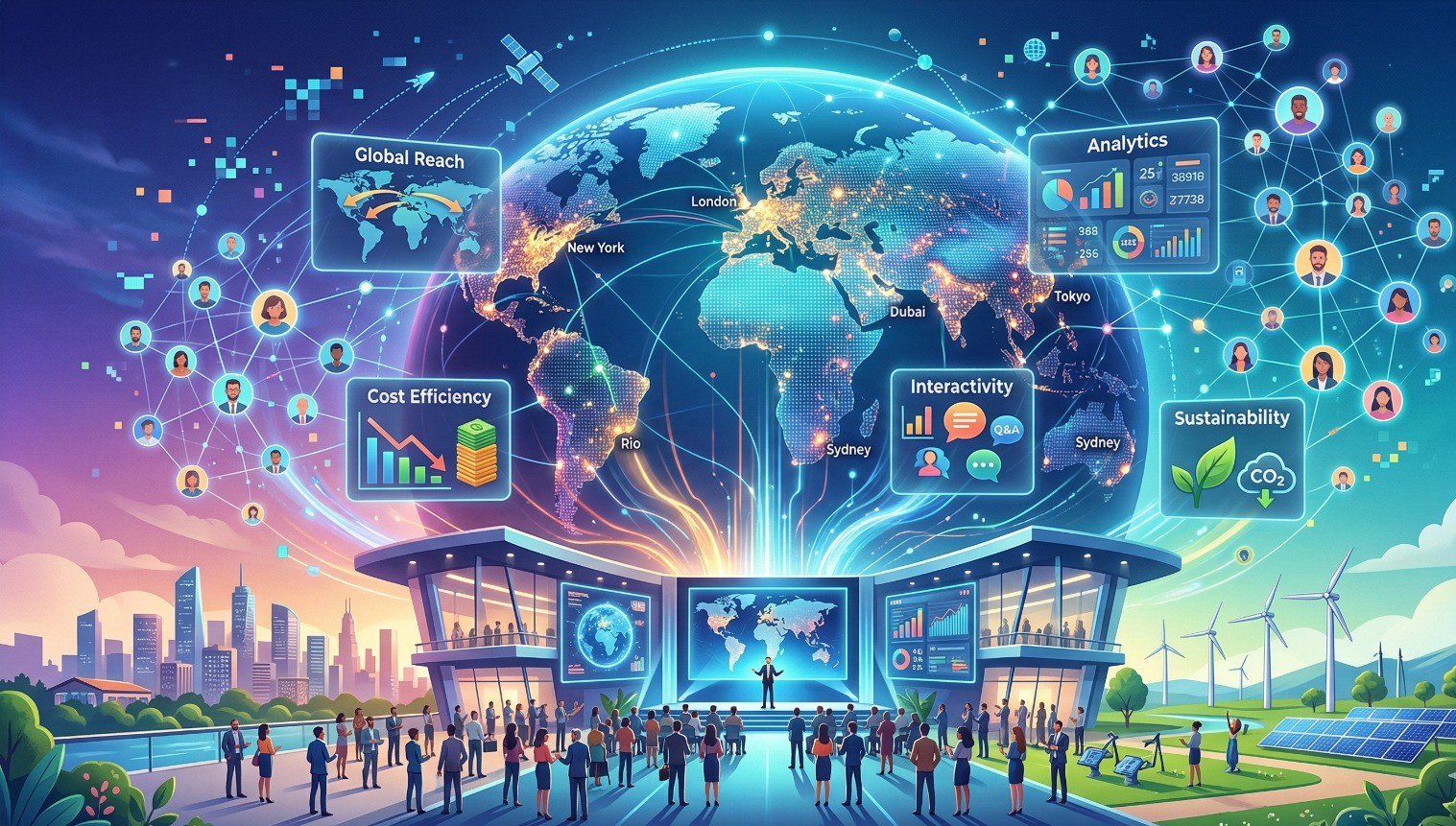
To help you build a more robust and scalable strategy, here are seven compelling reasons to integrate digital conferences into your corporate calendar.
Expand Your Global Reach Without Expanding Your Budget
Virtual conferences open your event programme to a worldwide audience that physical logistics would otherwise lock out. Here is how removing geographic barriers translates into a stronger, more valuable event, both for your delegates and your sponsors.
Breaking Down Geographic Barriers For Attendees
Physical conferences inherently exclude a portion of your target audience. Travel expenses, visa restrictions, and demanding time zones frequently prevent international delegates from participating in valuable industry conversations. Virtual conferences remove these logistical barriers entirely. Attendees can join a keynote session from London, Sydney, or New York with a simple click. Furthermore, modern platforms offer real-time translation and closed captioning tools, ensuring your content is accessible to a truly global audience regardless of their primary language or hearing ability.
How A Wider Audience Strengthens Your Event Programme’s Value
When you remove geographic limitations, your online event attendance naturally increases. More delegates bring diverse perspectives, enriching Q&A sessions, networking discussions, and overall participation. A larger, more global audience also presents a much stronger case for sponsorship, as partners can reach international prospects without the cost of flying their sales teams overseas. Ultimately, this expanded reach helps position your gathering as an international industry fixture, amplifying your global event strategy.
Significantly Reduce Event Costs While Maintaining Quality
Going virtual does not mean going cheap, it means spending smarter. From eliminating venue overheads to freeing up budget for better speakers and technology, the financial case for digital conferences is compelling.
Where Virtual Conferences Cut The Biggest Costs
Managing an event management budget requires careful allocation of resources, and physical events carry substantial overheads. By transitioning to a virtual format, organisations eliminate the need for expensive venue hire, extensive food and beverage catering, printed materials, and travel subsidies for staff. Additionally, a digital conference requires a smaller on-site production team compared to the extensive rigging, staging, and security personnel needed for in-person conferences.
Reinvesting Savings: Better Speakers, Better Tech, Better Roi
The capital saved on logistical overheads does not disappear; it can be strategically reinvested to elevate the overall experience. With a freed-up budget, you can attract higher-profile keynote speakers who might have been too expensive or unavailable for physical travel. You can also invest in a premium virtual conference platform, ensuring a polished, broadcast-quality delegate experience. This reallocation of funds directly improves your virtual event ROI, delivering a superior product for a fraction of the traditional cost.
Boost Attendance Rates With A Lower Barrier To Entry
The biggest drop-off between registrations and actual attendance at physical events comes down to friction. Virtual conferences remove that friction entirely, making it easier for delegates to commit, and to show up.
Why Delegates Prefer The Flexibility Of Virtual Attendance
Professionals are increasingly protective of their time. The commitment required to attend a physical conference, encompassing travel time, accommodation costs, and days away from the office, can be prohibitive. Virtual attendance offers unparalleled flexibility. Delegates can log in for the sessions most relevant to their roles and continue their daily tasks in between. Furthermore, on-demand session recordings extend participation far beyond the live event day, allowing attendees to consume content at their own pace.
Filling Your Event Programme Calendar More Consistently
The lower barrier to entry for digital events translates to higher RSVP-to-attendance conversion rates compared to physical gatherings. Because the friction of attending is vastly reduced, you can run more frequent events throughout the year without risking delegate fatigue. This consistent engagement keeps your association or business at the forefront of your audience’s minds, maintaining strong conference participation and steady delegate attendance across your entire calendar.
Unlock Powerful Data And Event Analytics You Can’t Get In-Person
Every interaction at a virtual conference generates measurable data, something a physical event simply cannot offer at the same depth. That intelligence transforms how you plan, report, and improve your event programme over time.
Measuring Engagement: Session Views, Poll Responses And Drop-Off Points
One of the most significant advantages of digital delivery is the wealth of attendee engagement data available. Unlike a physical hall where you can only guess how many people are paying attention, a virtual platform captures event analytics in real time. You can track exact session views, monitor participation in live polls, measure Q&A activity, and identify specific drop-off points during a presentation. This granular data reveals exactly which topics resonate most with your audience.
Using Post-Event Data To Improve Your Event Programme Year-On-Year
The insights gathered through event management software provide a factual foundation for future planning. Detailed reporting helps justify sponsorship investments by showing partners exactly who interacted with their digital booths. It also allows you to refine ticket pricing based on content popularity. These immediate, data-driven feedback loops shorten the planning cycle, ensuring that your next event is even more aligned with your audience’s preferences.
Strengthen Your Sustainability Credentials And Esg Commitments
Environmental responsibility is no longer a side consideration in event planning, it sits at the heart of how organisations are judged by delegates, sponsors, and stakeholders. Virtual conferences offer one of the most direct routes to meaningful, measurable progress.
The Carbon Footprint Comparison: Virtual Vs. In-Person Conferences
As organisations face increasing pressure to operate responsibly, sustainable events have become a corporate priority. The environmental impact of flying hundreds of delegates to a single location, accommodating them in hotels, and fitting out a venue is substantial. Removing flights, hotel stays, and physical infrastructure dramatically reduces carbon emissions. Industry data consistently shows that transitioning to a digital format can reduce an event’s carbon footprint by up to 90%, offering massive CO₂ savings.
Why Sustainability In Your Event Programme Matters To Delegates And Sponsors
Implementing an ESG event strategy is no longer just a commendable initiative; it is a business imperative. Eco-conscious delegates actively choose to associate with organisations that boast genuine green credentials. Similarly, corporate sponsors heavily value alignment with their own environmental reporting targets. By embracing responsible MICE practices through digital delivery, you enhance your brand’s reputation and appeal to a more ethically minded professional base.
Create More Engaging, Interactive Experiences With The Right Technology
The assumption that virtual means passive is outdated. Today’s conference platforms are built to drive participation at every stage of the event, and in some respects, they offer engagement capabilities that physical formats cannot match.
Interactive Features That Drive Delegate Participation
There is a common misconception that digital events are passive experiences. In reality, modern online conference tools are designed specifically to maximise audience interaction. Features such as live polls, interactive Q&A sessions, dedicated breakout rooms, and virtual networking lounges keep attendees actively involved. Gamification encourages participation by rewarding attendees for interacting with sponsors or completing surveys. Furthermore, speed networking tools and one-to-one video meeting hubs effectively replicate the serendipitous hallway conversations of physical conferences, driving meaningful virtual event engagement.
Running Concurrent Sessions: Maximising Content Value In Your Event Programme
Physical venues are often limited by the number of available rooms, restricting how much content you can deliver simultaneously. Hybrid event technology and virtual platforms allow multiple tracks to run concurrently without spatial constraints. If attendees face scheduling conflicts, they do not have to miss out; on-demand recordings extend the shelf life of every session well beyond the event day. This ensures maximum value for both the organisers providing the content and the delegates consuming it.
Future-Proof Your Event Programme With A Hybrid-Ready Strategy
Resilience is the most underrated quality in an event programme. Organisations that build virtual capability now, as a strategic choice rather than a crisis response, will be far better positioned when disruption inevitably arrives.
How Virtual Capability Prepares You For Any Disruption
The COVID-19 era proved unequivocally that virtual contingency planning is not optional—it is essential. Organisations that already possessed established digital infrastructure were able to pivot quickly, losing fewer events and maintaining revenue streams during unprecedented disruptions. Building digital capabilities into your operations ensures that you are prepared for any future logistical challenges, from travel strikes to extreme weather events.
Blending Virtual And In-Person: Building A Hybrid Event Programme That Scales
The future of events lies in flexibility. A carefully planned hybrid event planning strategy captures the unique energy and face-to-face networking of physical gatherings while extending access to global virtual attendees. This dual approach aligns perfectly with current MICE industry trends, catering to diverse delegate preferences. By adopting this blended model, you position your organisation as a forward-thinking, innovative host capable of delivering exceptional value across multiple mediums.
Is A Virtual Conference Right For Your Event Programme? Let’s Talk!
Integrating digital conferences into your corporate strategy provides immense strategic value. From expanding your global reach and reducing overhead costs to unlocking precise event analytics and strengthening ESG commitments, the benefits are undeniable. Crucially, these digital formats are designed to complement, rather than replace, your in-person gatherings, creating a more resilient and flexible calendar.
If you want to achieve the highest levels of attendee engagement and brand prestige, having a virtual and hybrid event expert on your team is invaluable. Our MICE concierge services are tailored to support your specific needs and ensure flawless execution.
To explore how we can help you build a robust, scalable strategy, contact MICE Concierge today or discover more about our comprehensive virtual event planning services. For more insights, review our guide to seamless event registration workflows.
Frequently Asked Questions
What Are The Benefits Of Virtual Conferences?
Lower costs, global reach, higher attendance rates, detailed analytics, reduced environmental impact, and greater scheduling flexibility for delegates.
What Is The Purpose Of A Conference Event?
To bring people together to share knowledge, discuss industry developments, build professional networks, and align stakeholders around common goals.
What Does A Virtual Conference Mean?
A fully online, multi-session event hosted on a digital platform, featuring live presentations, breakout rooms, networking tools, and sponsor spaces — accessible from anywhere in the world.
What Are The 5 C’s Of An Event?
Concept, Coordination, Control, Culmination, and Closeout — the five stages that guide an event from initial idea through to post-event wrap-up and evaluation.